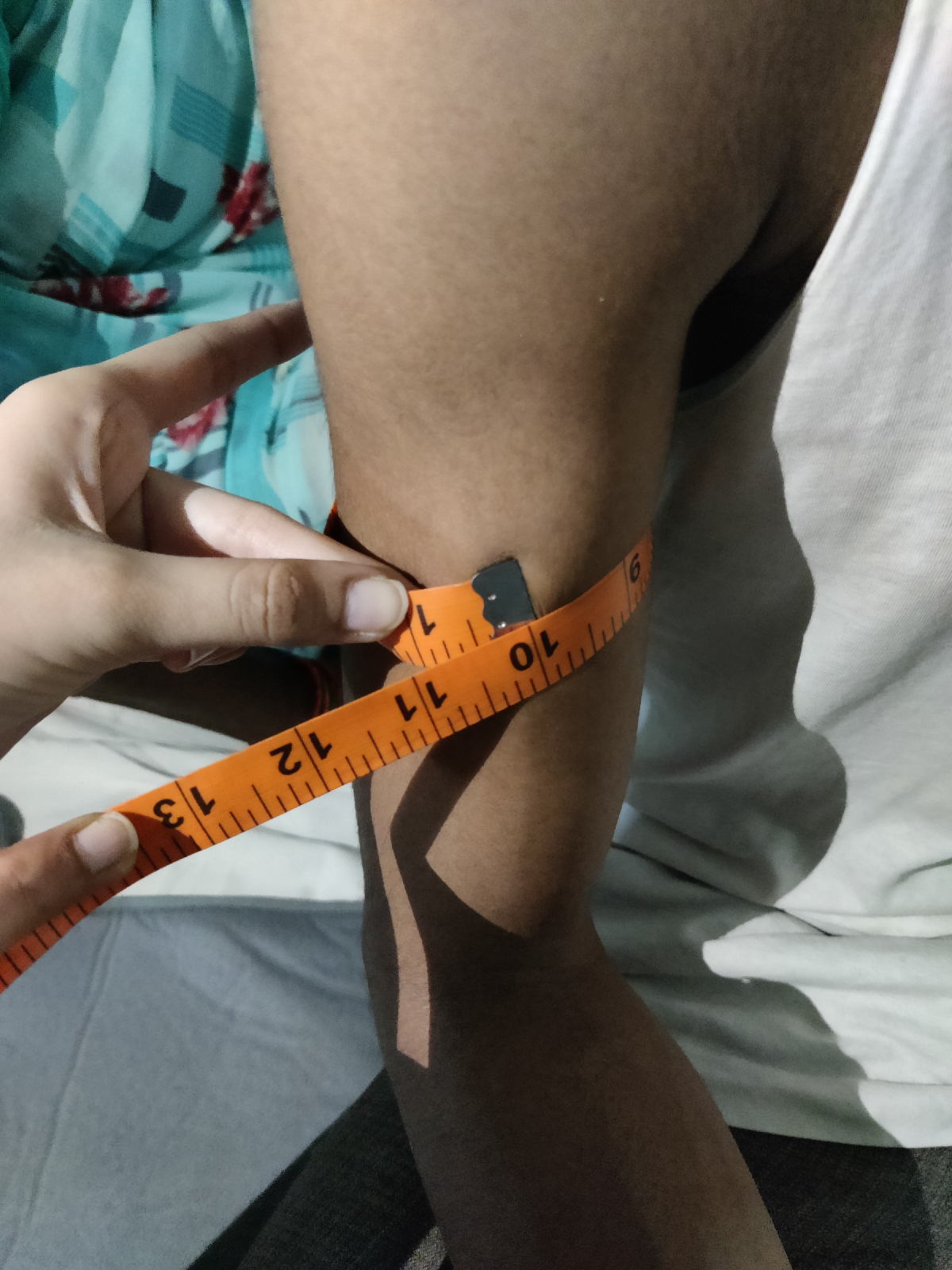
60 year old male , R/o Nakrekal , Farmer by occupation came with the Chief complaints Decreased urine output since 20 days Abdomen distension since 1 week Shortness of breath since 1 week History of present illness Patient was apparently asymptomatic 20 days ago the developed high grade fever , continuous , assosiated with chills and rigors for which he was admitted to local hospital medications and they put foleys catheter and patient symptoms were relieved . • Patient complaining of decreased urine output since 20 days • Abdomen distension not a/w pain or tenderness • SOB since 1 week Grade 3 proggresses to Grade 4 . H/o Orthopnea H/o Burning micturation No H/o PND No H/o Vomitings , Loose stools History of past illness Patient had a trauma over right bigtoe which was not healing for which toe was amputated 3 years ago Patient also had a trauma over right lateral aspect of leg . And healed 1 month ago ...
Popular posts from this blog
OSCE & LEARNING POINTS
OSCE • Which is the better afterload reducing drug? One of the classes of drugs commonly used to reduce afterload is vasodilators. Afterload refers to the resistance the heart has to overcome to eject blood into the systemic circulation. Vasodilators help dilate blood vessels, reducing this resistance and making it easier for the heart to pump blood. Several types of vasodilators are used for this purpose: 1. **Angiotensin-Converting Enzyme (ACE) Inhibitors:** - **Examples:** Enalapril, Lisinopril, Ramipril. - **Mechanism:** Inhibit the conversion of angiotensin I to angiotensin II, a potent vasoconstrictor. This leads to vasodilation and reduced afterload. 2. **Angiotensin II Receptor Blockers (ARBs):** - **Examples:** Losartan, Valsartan, Irbesartan. - **Mechanism:** Block the action of angiotensin II on its receptors, resulting in vasodilation and decreased afterload. 3. **Calcium Channel Blockers:** - **Examples:...
29 year old male patient . Daily labour by occupation , resident of Bhongir came with Chief complaints Pain abdomen 10 days Vomitings 10 days Involuntary movements of left upper limb 1 week History of present illness Patient was apparently asymptomatic 10 days ago then he developed pain abdomen 10 days ago which was sudden onset in epigastric region , sharp which is radiating towards back , aggrevating on taking foods. • H/o 2 episodes of vomiting which is non bilious non blood tinged , non projectile water as content . • H/o seizure , involuntary movemnt of the left upper limb a/w Deviation of mouth to right side uprolling of eyes , drooling of saliva H/o Loss of conciousness for almost 15 mins and regained his conciousness. H/o Slurring of speech H/o Memory loss No H/o Trauma , No H/o Neck stiffness , No H/o Fever , No H/o weakness No H/o Loose stools involuntary micturation or defecation History of p...
Comments
Post a Comment